
Blog
Every day, an Indian farmer wakes up before sunrise, tends his crops with care, and delivers his best produce — only to be paid a fraction of what it is actually worth. The reason? A long, broken chain of middlemen standing between the farm and the final buyer.
In India’s traditional agricultural supply chain, a single batch of tomatoes or mangoes can pass through 4–5 intermediaries before it reaches a retailer’s shelf. Each layer adds cost, subtracts profit from the farmer, and reduces the freshness that the buyer deserves.
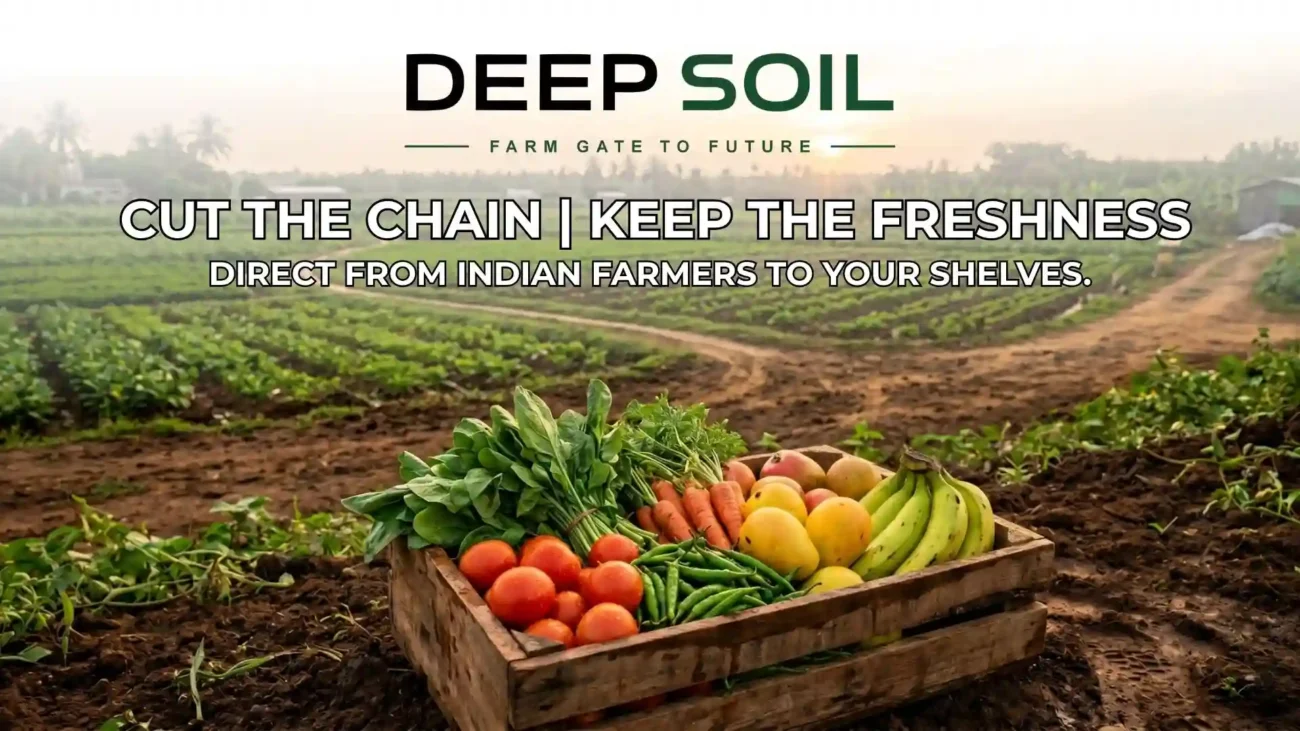
Direct farm trade is changing this. At Deep Soil, we bridge the gap between farmers and small businesses — sourcing fresh vegetables and fruits directly from farmers and delivering them straight to retailers, kiranas, and food businesses. No middlemen. No markups. Just fair prices for farmers and unbeatable freshness for buyers.
This article explains why the middleman problem is hurting Indian agriculture, how the direct farm-to-retailer model works, and why it is the future of fresh produce supply in India.
The Middleman Problem in Indian Agriculture
How Much Are Farmers Really Losing?
The Indian agricultural supply chain has one of the highest middleman margins in the world. According to research published by the Reserve Bank of India, farmers often receive only 30– 40% of the final consumer price for their fresh produce. The rest is absorbed by commission agents (arhatiya), wholesalers, transporters, and traders at the mandi.
For a kilogram of fresh vegetables that sells at ₹40 at a retail shop, the farmer may receive as little as ₹12–₹15.
This is not just unfair — it is unsustainable. <a href=”https://thedeepsoil.com/”>India loses approximately 30–40% of its fruits and vegetables</a> due to poor cold chain infrastructure, and small farmers, who make up over 81% of agricultural holdings in India, are often forced to sell in panic at whatever price middlemen offer, just to avoid losses from spoilage.
Why the Traditional Mandi System Falls Short
India has over 7,000 mandis (APMC wholesale markets) across the country. While these mandis were designed to protect farmers, the reality is different:
- Price opacity: Farmers rarely know the real market price before arriving at the mandi.
- Forced distress selling: Perishable produce like tomatoes, spinach, and berries cannot wait — farmers sell at whatever price is offered.
- Multiple commission layers: Each intermediary takes a margin of 8–15%, compounding across 4–5 layers.
- Delayed payments: Farmers often wait days or weeks to receive payment.
- Produce quality loss: Every extra hand that touches the produce reduces its freshness and shelf life.
The result is a broken system where hard-working farmers remain poor while intermediaries earn the bulk of profits.
The Direct Farm Trade Model — How It Works
What Is Direct Farm-to-Retailer Trade?
Direct farm trade, also called farm-to-retailer sourcing, is a model where a company procures fresh produce directly from the farmer — bypassing the mandi chain — and supplies it directly to retailers, kirana stores, restaurants, and food businesses.
This eliminates 3–4 layers of middlemen and creates a two-sided benefit:
Farmers earn more because they get paid closer to the actual market price.
Retailers and buyers get fresher produce because the supply chain is shorter and faster.
At Deep Soil, this is exactly the model we follow. We source fresh vegetables and fruits directly from farmers, handle quality checks and logistics, and deliver to small businesses and retailers across our network — all without a single unnecessary middleman.
Benefits for Farmers: Why Fair Price Matters
1. Higher Income Per Harvest
When the middleman margin is removed, farmers can earn 25–40% more per kilogram of produce compared to selling through traditional mandis. For a small farmer producing 500 kg of vegetables per week, this can mean a significant increase in annual income.
2. Faster and Guaranteed Payments
In the traditional system, farmers often wait days for payment — especially after selling at mandis. Direct trade partners like Deep Soil pay farmers quickly, improving their cash flow and reducing their dependence on agricultural loans.
3. Demand Visibility and Crop Planning
When farmers know what retailers need and in what quantity, they can plan their crops better. This reduces overproduction, minimises waste, and helps farmers grow what the market actually wants — leading to better prices and less spoilage.
4. Dignity and Recognition
Direct trade gives farmers a direct relationship with their buyers. Their produce is not anonymous — it goes from their hands to a retailer’s shelf with traceability. This restores dignity to the farmer and creates accountability in the supply chain.
Benefits for Retailers and Small Businesses
1. Fresher Produce, Longer Shelf Life
In the traditional chain, produce can spend 3–5 days in transit through multiple intermediaries.
With direct sourcing, fresh vegetables and fruits reach retailers within 12–24 hours of harvest. This means better taste, longer shelf life, and less wastage on the retailer’s end.
2. Lower Procurement Costs
By removing middlemen, retailers often save 15–25% on procurement costs compared to buying from wholesale markets. For kirana stores and small food businesses with thin margins, this makes a meaningful difference to profitability.
3. Consistent Quality and Supply
Direct farm partnerships allow for standardised grading and quality checks at the source.
Retailers receive consistent quality produce rather than dealing with variable quality from mandi lots.
4. Support for Local Farmers
Retailers who source through direct farm trade models are actively supporting the local farming community. This is increasingly important to consumers who care about where their food comes from and how farmers are treated.
How Deep Soil Is Bridging the Gap
Deep Soil was built on a simple but powerful idea: every farmer deserves a fair price, and every buyer deserves the freshest produce.
Here’s how our direct trade model works in practice:
Step 1 — Farm Sourcing We partner directly with farmers growing fresh vegetables and fruits. We visit farms, understand their produce, and agree on fair, transparent pricing before the harvest.
Step 2 — Quality Grading at Source Produce is graded and quality-checked at or near the farm level. This ensures only fresh, market-ready produce enters our supply chain — reducing waste and delivering consistency.
Step 3 — Fast Logistics Our logistics chain is designed to move produce from farm to retailer as quickly as possible, preserving freshness and nutritional value.
Step 4 — Direct Delivery to Retailers We deliver fresh vegetables and fruits directly to kirana stores, retail outlets, restaurants, and small food businesses — cutting out every unnecessary intermediary.
The result? Farmers earn more. Retailers pay less. And the produce on the shelf is genuinely fresh.
💡 Looking to source fresh vegetables and fruits for your retail business directly from Indian farmers? Explore Deep Soil’s direct sourcing solutions and see how we can improve your margins and freshness.
Direct Farm Trade vs. Traditional Mandi Supply Chain — A Comparison
| Factor | Traditional Mandi Chain | Direct Farm Trade (Deep Soil) |
| Farmer’s price realisation | 30–40% of retail price | 55–70% of retail price |
| Number of intermediaries | 4–5 layers | 0–1 layer |
| Time from farm to retailer | 3–5 days | 12–24 hours |
| Produce freshness | Reduced | Maximum |
| Retailer procurement cost | Higher | 15–25% lower |
| Farmer payment speed | Days to weeks | Fast and guaranteed |
| Price transparency | Low | High |
Why India Needs to Move Towards Direct Farm Trade in 2025
India is at a critical point in its agricultural journey. The government’s focus on doubling farmers’ incomes, the rise of agritech startups, and growing consumer demand for fresh, traceable food are all pushing the supply chain towards direct trade models.
The Union Agriculture Minister at the Agribusiness Summit 2025 reaffirmed the government’s commitment to ensuring farmers receive fair prices through policy interventions. But policy alone is not enough — market-driven solutions like direct farm trade are what will truly transform farmers’ livelihoods.
India’s fresh fruit exports have grown over 18% in value in FY2024-25, reaching 85 countries.
The demand for quality, fresh Indian produce is rising — both domestically and internationally. Direct trade models are best positioned to capture this opportunity while ensuring farmers share in the value they create.
Companies and platforms that eliminate the middleman are not just building businesses — they are helping solve one of India’s most persistent economic challenges: the gap between what a farmer earns and what the market pays.
Expert Insights: What the Data Tells Us
- Indian farmers producing perishables are often forced to “crash sell” at mandi prices dictated by middlemen to avoid spoilage losses. (Source: Research published in agricultural economics literature)
- Direct trade platforms in India have helped improve farmer net realisation by 25–40% over conventional mandi selling, according to farm-direct companies operating in the sector.
- Small and marginal farmers — who represent over 81% of agricultural holdings in India — are disproportionately hurt by the middleman chain because they lack bargaining power and market access.
- Buyers who procure directly from farmers can save 35–40% compared to prevailing retail procurement prices, while still paying farmers more.
The math is clear. The traditional supply chain is inefficient for everyone except the intermediaries. Direct farm trade is not just a business model — it is the most logical and fair structure for India’s fresh produce supply chain.
FAQs
What is direct farm trade in India?
Direct farm trade is a model where fresh produce — vegetables and fruits — is sourced directly from farmers and supplied to retailers or buyers without going through traditional middlemen like commission agents or wholesale mandis. It ensures farmers get a fairer price and buyers receive fresher produce.
How much more do farmers earn through direct trade?
Farmers can earn 25–40% more per kilogram through direct trade compared to selling through traditional mandi channels, where multiple intermediary margins reduce their final payout to as little as 30–40% of the retail price.
Is direct farm-to-retailer sourcing legal in India?
Yes. The Indian government has encouraged direct trade through reforms to the APMC Act and platforms like e-NAM. Private companies can legally procure directly from farmers and supply to buyers under the existing framework.
What types of businesses can benefit from sourcing directly from farmers?
Kirana stores, supermarkets, restaurants, cloud kitchens, tiffin services, hotels, and any small food business can benefit from direct farm sourcing. They receive fresher produce at lower procurement costs compared to buying from wholesale markets.
How does Deep Soil ensure quality in its direct farm supply chain?
Deep Soil conducts quality grading at the farm or collection point level before produce enters the supply chain. Only fresh, market-ready vegetables and fruits are accepted, ensuring consistent quality for retail buyers.
Does cutting the middleman hurt anyone in the supply chain?
Direct farm trade primarily impacts commission agents and intermediaries who add cost but limited value. Farmers earn more, retailers get better deals, and end consumers receive fresher food. The overall ecosystem benefits.
How quickly does fresh produce reach retailers through direct sourcing?
Through direct farm trade models like Deep Soil, fresh vegetables and fruits can reach retailers within 12–24 hours of harvest, compared to 3–5 days in the traditional mandi chain.
Key Takeaways
Indian farmers often receive only 30–40% of the final retail price for their produce due to multiple middlemen layers in the traditional supply chain.
Direct farm trade eliminates 3–4 layers of intermediaries, allowing farmers to earn 25–40% more per harvest.
Retailers and small businesses that source directly from farmers benefit from fresher produce, lower procurement costs (15–25% savings), and consistent supply.
Deep Soil operates a direct farm-to-retailer model for fresh vegetables and fruits in India, creating fair value for both farmers and buyers.
India’s fresh produce market is growing rapidly — direct trade is the most sustainable and equitable model for capturing this growth.
With over 81% of India’s agricultural holdings belonging to small and marginal farmers, direct trade models have the power to meaningfully improve livelihoods at scale.
Ready to Source Fresher Produce and Support Indian Farmers?
Whether you are a kirana store owner, a restaurant, or a retail food business – you deserve the freshest vegetables and fruits at the best price, sourced directly from the farmers who grow them. Contact Deep Soil for farm-fresh produce, cutting out the middlemen and ensuring every purchase supports a farmer getting paid fairly.