In today’s fast-paced world of ultra-processed foods, ancient food wisdom is making a powerful comeback. Traditional grain processing methods—used for thousands of years—are now being rediscovered for their ability to preserve nutrition, improve digestion, and support overall health.
From soaking and fermenting to stone grinding and sprouting, these methods were not accidental. They evolved to make grains more nourishing, bioavailable, and easier for the human body to absorb. This blog explores how traditional grain processing preserves nutrition, why it matters today, and how it aligns with a sustainable food future—core to the philosophy of The Deep Soil.
What Is Traditional Grain Processing?
Traditional grain processing refers to time-tested methods used before industrial milling became dominant. These techniques focus on preparing grains in harmony with natural biological processes rather than stripping them for speed or shelf life.
Common Traditional Grain Processing Methods:
- Soaking
- Fermentation
- Sprouting (germination)
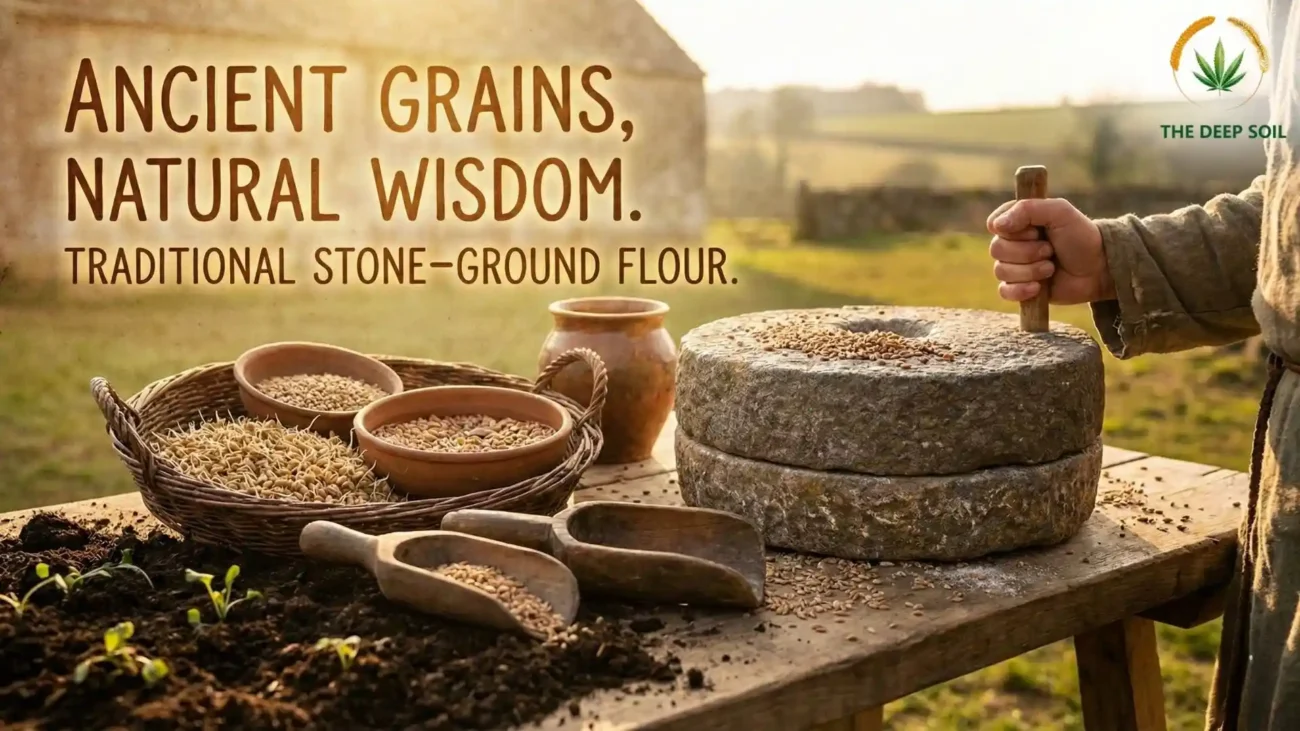
- Stone grinding
- Slow drying
These methods contrast sharply with modern roller milling, which removes nutrient-rich bran and germ layers.
Why Modern Grain Processing Reduces Nutrition
Modern grain processing prioritizes:
- Speed
- Uniformity
- Extended shelf life
As a result, it often:
- Removes fiber-rich bran
- Strips essential minerals
- Destroys heat-sensitive vitamins
- Increases glycemic load
This is where traditional grain processing stands apart—by preserving the grain’s natural integrity.
How Traditional Grain Processing Preserves Nutrition
1. Improves Mineral Absorption
Grains naturally contain phytic acid, an anti-nutrient that binds minerals like:
- Iron
- Zinc
- Calcium
- Magnesium
Traditional grain processing methods such as soaking and fermentation break down phytic acid, significantly improving mineral bioavailability.
Result: Better nutrient absorption without supplementation.
2. Preserves Fiber and Micronutrients
Stone grinding—a core part of traditional grain processing—keeps:
- Bran
- Germ
- Endosperm intact
This preserves:
- Dietary fiber
- B vitamins
- Vitamin E
- Antioxidants
Industrial milling removes up to 70% of a grain’s nutrients.
3. Enhances Digestibility
Fermentation introduces beneficial microbes that:
- Pre-digest starches
- Break down gluten proteins
- Reduce bloating and gut inflammation
This is why traditionally processed grains are often tolerated better than refined alternatives.
4. Supports Gut Health
Fermented grains act as prebiotic foods, feeding beneficial gut bacteria. A healthy gut:
- Strengthens immunity
- Improves metabolism
- Reduces chronic inflammation
Traditional grain processing supports a microbiome-first approach to nutrition.
5. Stabilizes Blood Sugar Levels
Whole grains processed traditionally:
- Digest more slowly
- Reduce insulin spikes
- Provide sustained energy
This makes them ideal for:
- Diabetics
- Athletes
- Individuals managing metabolic health
Traditional Grain Processing Methods Explained
Soaking
- Neutralizes enzyme inhibitors
- Activates beneficial enzymes
- Reduces cooking time
Fermentation
- Produces natural probiotics
- Enhances flavor and aroma
- Improves shelf stability naturally
Sprouting
- Increases vitamin C and B content
- Boosts amino acid availability
- Improves protein quality
Stone Grinding
- Maintains grain integrity
- Avoids heat damage
- Preserves natural oils
Each method plays a role in traditional grain processing preserving nutrition.
Why Traditional Grain Processing Is Gaining Popularity
Search trends show growing interest in:
- Gut health
- Ancestral diets
- Whole foods
- Sustainable nutrition
Consumers are actively searching for foods that are:
- Less processed
- More natural
- Nutrient-dense
Traditional Grain Processing and Sustainability
At The Deep Soil, food is not just nourishment—it’s a relationship with land and soil.
Traditional grain processing:
- Supports local farming systems
- Reduces energy consumption
- Minimizes food waste
- Honors biodiversity
It aligns perfectly with regenerative agriculture and conscious consumption.
How You Can Incorporate Traditionally Processed Grains
- Choose stone-ground flours
- Opt for fermented grain products
- Support local mills and farmers
- Read ingredient labels carefully
Small choices create lasting health impact.
Conclusion
Traditional grain processing is not outdated – it is scientifically relevant, nutritionally superior, and environmentally responsible. By preserving minerals, enhancing digestion, and supporting gut health, it offers a powerful alternative to modern refined foods.
As awareness grows, traditional grain processing will continue shaping the future of conscious nutrition—and The Deep Soil stands at the heart of this movement.