Food quality is defined not only by how it is grown, but also by how it is processed. At The Deep Soil, we honor both by sourcing ingredients responsibly (learn more on the About Us page) and using time-tested processing techniques. Understanding the benefits of traditionally processed food helps you choose nourishment that prioritizes natural value and wholesome nutrition
What Is Traditionally Processed Food?
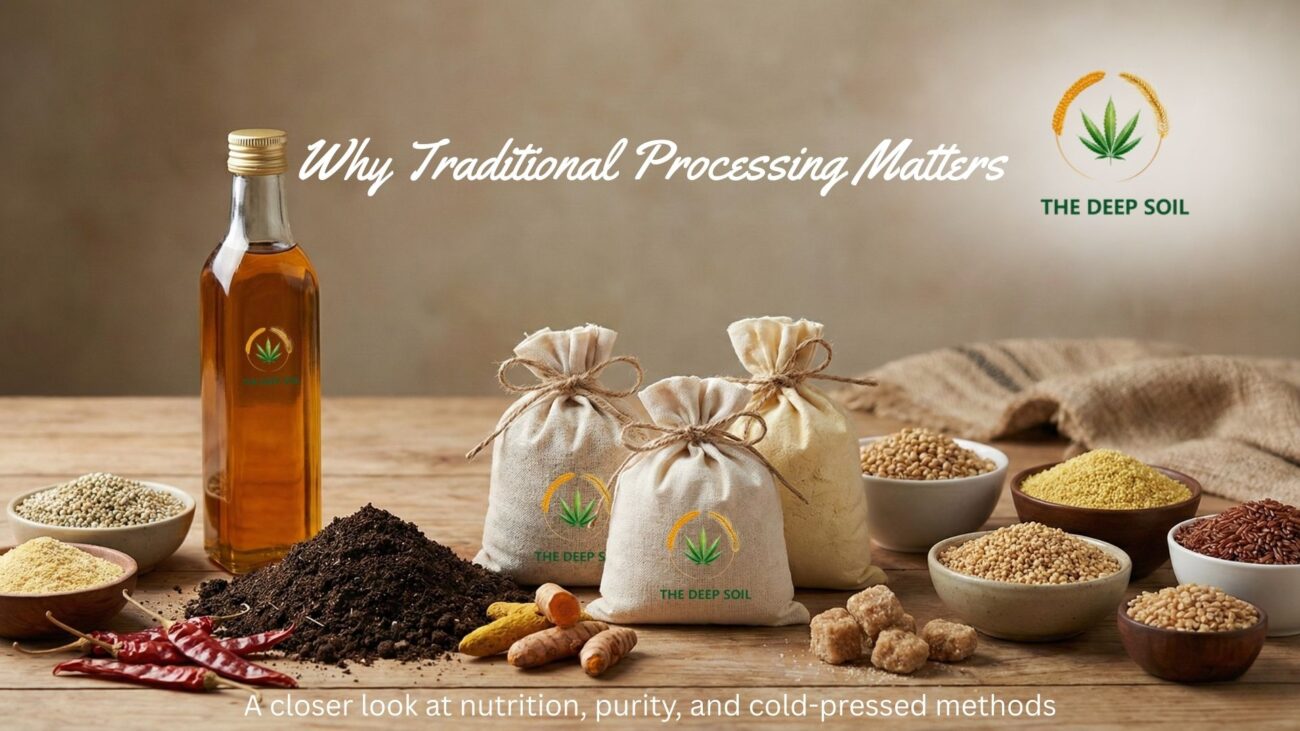
Traditionally processed food is prepared using methods that minimize heat and chemical intervention. These include cold-pressing, slow milling, and gentle extraction techniques that preserve natural properties.
For example, we use cold pressing for products like Almond Oil to protect delicate nutrients and flavor.
Key Benefits of Traditionally Processed Food
1. Preserves Natural Nutrients
One of the key benefits of traditionally processed food is superior nutrient retention. Cold-pressed oils and slow-milled flours like Barnyard Millet Flour retain vitamins, antioxidants, and essential fatty acids that might otherwise degrade under high heat or harsh refining.
2. No Chemical Refining
Traditional processes avoid chemical solvents or bleaching. Products such as Yellow Mustard Oil stay as close to their original state as possible, eliminating unnecessary exposure to synthetic residues and maximizing purity.
3. Better Digestibility and Absorption
Natural processing respects the composition of food. Whole-grain pasta alternatives like Millet Pasta and lightweight staples like Millet Noodles provide balanced nutrients that are easier to digest and absorb, delivering sustained energy with minimal processing stress.
Soil-Driven Benefits of Traditionally Processed Food
4. Nutrition That Begins in the Soil
Quality food begins with healthy soil and careful cultivation. Ingredients that start with this care — like the grains used in Amaranth Flour (Rajgira Atta) — retain their natural nutrient profiles when processed gently.
5. Authentic Flavor and Aroma
Flavor integrity is a hallmark of traditional processing. Whole staples like Red Rice develop deeper taste and aroma when processed without excessive heat or additives, reflecting true ingredient quality.
Environmental Benefits of Traditionally Processed Food
6. Lower Energy Consumption
Traditional methods typically require less energy than large-scale industrial refining. By minimizing heat and machinery use, cold-pressed and slow-milled foods reduce overall environmental impact.
7. Minimal Waste
Avoiding chemical treatments and complex refining reduces production waste, making traditional processing inherently cleaner and more resource-efficient. For customers, this translates into products with fewer processing by-products and greater value.
Health-Focused Benefits of Traditionally Processed Food
8. Supports Balanced Daily Nutrition
Foods processed with methodical care offer intact fats, fiber, and micronutrients. For example, using Maize Flour (Makki Atta) in daily cooking delivers wholesome energy, natural texture, and whole-grain benefits.
9. Aligned with Traditional Wisdom
Traditional processing methods are rooted in long-standing food wisdom, where nourishment was preserved with respect for nature’s rhythms. Choosing such foods supports both heritage and health.
Why Traditionally Processed Food Matters Today
As food systems become more industrialized, there is growing value in foods that maintain integrity from soil to table. The benefits of traditionally processed food are most meaningful when production respects real ingredients, minimal intervention, and nutrient preservation.
Your Source of Naturally Processed Nourishment
At The Deep Soil, we bring this philosophy to every product we make. From cold-pressed oils like Almond Oil to slow-milled flours and wholesome pastas, our range is built on thoughtful processing. Learn more about how we deliver quality and care on our About Us page.
Final Thoughts on the Benefits of Traditionally Processed Food
The benefits of traditionally processed food extend beyond nutrition. They reflect a commitment to natural methods, careful processing, and respect for ingredient integrity — values that define what we do at The Deep Soil.